Review
Review | Agent 64: Spies Never Die
Agent 64: Spies Never Die not only recreates the experience of playing GoldenEye 007 and Perfect Dark on the N64, but it is a reminder of why they are among the best games of all time.
 8Bit/Digi
News for Bay Area Gamers and Cosplayers
Agent 64: Spies Never Die not only recreates the experience of playing GoldenEye 007 and Perfect Dark on the N64, but it is a reminder of why they are among the best games of all time.

No matter the progress or advancements made in game development, I will always stand by the fact that GoldenEye 007 and Perfect Dark for the N64 are the greatest first person shooters ever made. No game before or since has been able to create an immersive experience that blends shooting and stealth action into a first person perspective while crafting detailed and dynamic levels that respond to the action. Few have come close to recapturing that experience, and most shooters do not even come within reach.
So when I saw the first trailer for Agent 64: Spies Never Die, it immediately got my attention. After playing it for some time, the game has done a solid job of recreating the feeling of playing GoldenEye 007 and Perfect Dark for the N64.
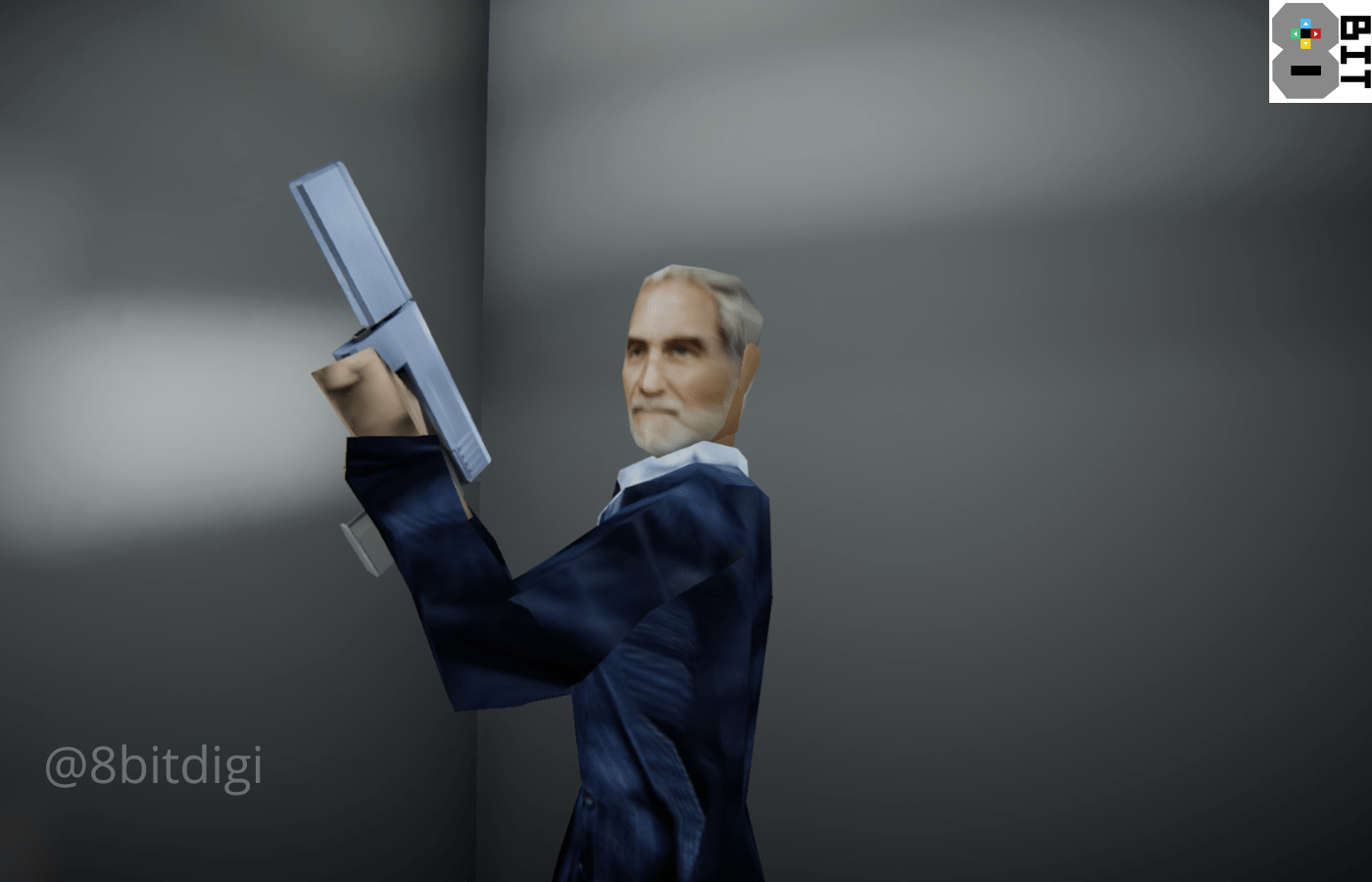
Agent 64: Spies Never Die is an indie shooter by solo developer Replicant D6 that aims to recreate the experience of playing two of the greatest shooters of all time. From its single-player campaign to the multiplayer, the game carries all the aspects that defined the classics. The result is a game that truly understands and respects its inspiration while also standing on its own as a unique experience.
John Walter is a retired spy who is pulled back into the world of espionage when a hit squad comes after him. Despite his best efforts, he is captured along with his daughter. To his shock, it was orchestrated by Dominic Pulp, a man he thought he killed years ago. Back from the dead, Pulp is plotting something sinister that threatens the world. Players must battle through 14 levels and fight waves of enemy forces as they work to once again save the world.
The story is a classic espionage tale one is all too familiar with from the 90s. A sinister organization is threatening the world, and it is up to a super spy to save the day. While it may not be the most interesting or unique story, that is acceptable because it is perfect for such an experience.

The gameplay is similar to the classics that inspired it. At its core, it is a first person shooter, but players can either utilize stealth or go in and start blasting. Each level begins with the player armed with a pistol or nothing at all, having to fight through the stage. Along the way, they pick up additional weapons and ammo. There is no health regeneration or HP pickups, but players can find body armor for additional protection. The arsenal consists of the genre classics like a pistol, SMG, and shotgun, with designs heavily influenced by the weapons of Perfect Dark.
The difficulty setting is unique, just like in GoldenEye 007, as the higher it goes, the greater the challenge presented. Easy means completing a few objectives against foes that are not challenging. The higher the difficulty, the smarter and stronger the enemies become, and the list of objectives also grows. This means players will tackle more tasks while also having to better explore the level to find what they need. For example, on the first level, Easy mode requires only that players escape, while Normal adds sabotaging the helicopter using tools they must find before making their exit.
Finally, we come to the multiplayer aspect of the game, one of the cornerstones of what made GoldenEye 007 a masterpiece. Players can once again experience the joy of battling online or locally through Arena. New characters, game modes, and stages unlock as players progress through the single-player story. Arena supports four player deathmatch, with the option of adding bots that bring more to the overall match. Additionally, players can experience the campaign with a friend through Co-Op mode.

To say Agent 64: Spies Never Die is a GoldenEye 007 inspired indie game would be a gross understatement. It is not inspired by the classics; it is a homage to not just GoldenEye 007 but also Perfect Dark and, to some extent, the TimeSplitters series. This is seen not just in the gameplay, setting, world building, and level design, but also in the small details that those who played these classics will recognize right away. That is because it perfectly encapsulates what made these classics so memorable and groundbreaking while also reminding us what current games lack at times. Players do not have to have played all the games mentioned, but it helps to have played either GoldenEye 007 or Perfect Dark. For old school gamers like myself, it truly takes us back to when these games first launched and how they raised the bar for shooters on consoles.
I also do not want to overlook the fact that gamers can now experience an old school shooter without a Nintendo 64. Some of us may still have our old consoles, but others will have to purchase one, and that may not be an option at times. Thankfully, Agent 64: Spies Never Die is easily available on PC to a wider audience, and I could take it with me anywhere. I could just take a laptop to a friend’s house and hook it up to their TV. At the same time, a new generation can experience what it was like to play GoldenEye 007, now with modern features.
Beyond the nostalgia, one cannot overlook how an indie shooter has as much replay value as the games that inspired it. The different difficulty levels allow for a different experience each time, while presenting new challenges. The multiplayer allows gamers to go back with friends to either battle it out or play the story in co-op. At the same time, there are a number of mini games and challenges that test player skills. The point is that Agent 64: Spies Never Die is rich in replay value without unnecessary bloat or padding.

The problem with trying to recapture the experience of a classic game is the fallacy that some aspects are treated like features rather than flaws. Agent 64: Spies Never Die falls into this trap with some gameplay choices that remain present even though they are considered outdated. Key among them is the lack of a checkpoint within a stage, as sometimes players may want to restart but not all the way from the beginning. Its manual aiming, while a nice novelty and callback, is also redundant. It was designed to work around the N64 controller’s single stick and has since been solved with modern controls, making it unnecessary when playing with a mouse and keyboard setup.
One aspect where the game falls flat compared to its inspiration is the pause menu. The GoldenEye 007 pause menu recreated the look of James Bond’s Omega watch from the film. The Perfect Dark pause menu was a comms device. The Agent 64: Spies Never Die pause menu is a generic pause menu. This would be acceptable had it not carried the same functions, such as listing mission objectives and providing a menu for gear and weapons.
Replicant D6 has demonstrated that sometimes it helps to tap into the legacy of the classics to create a good game. Not every shooter needs enhanced graphics that push a system to its limits, massive open worlds, and a constantly evolving landscape. Sometimes, we just want to play a game like GoldenEye 007, and Agent 64: Spies Never Die delivers on that.
Agent 64: Spies Never Die not only recreates the experience of playing GoldenEye 007 and Perfect Dark on the N64, but it is a reminder of why they are among the best games of all time. It perfectly captures the experience of playing the masterpieces that inspired it, with its style, gameplay, and well placed homages. The game is rich in replay value, presenting a different experience based on the difficulty while offering a number of ways to customize the multiplayer experience.
Disclaimer: The publisher, through a PR representative, provided the game used for this review.
This review is the critique and thoughts of one writer. If you want to see how other critics felt, then check it out on OpenCritic.
8Bit/Digi is an independent media outlet that provides insight into the gamer community of the San Francisco Bay Area.

Stan Rezaee is the founder and editor of 8Bit/Digi, a Bay Area video game and anime news outlet. A journalist, gamer, and cosplayer covering the industry since 2016, he writes about retro games, new releases, fan conventions, and cosplay culture across the San Francisco Bay Area.


