Review
Review | Metal Gear Solid: Peace Walker – Master Collection Version Vol.2 (PC)
Metal Gear Solid: Peace Walker from the Master Collection Vol. 2 revives Kojima’s overlooked gem that laid the groundwork for The Phantom Pain.
 8Bit/Digi
News for Bay Area Gamers and Cosplayers
Metal Gear Solid: Peace Walker from the Master Collection Vol. 2 revives Kojima’s overlooked gem that laid the groundwork for The Phantom Pain.

The last few years have seen a revival of the Metal Gear franchise as Konami works to bring new life to one of the defining action series. Metal Gear Solid Δ: Snake Eater was already an impressive remake of one of the greatest games of all time, but now they have taken it one step further with the Master Collection Vol. 2, a remaster of three titles that fans have wanted to experience on modern consoles and the PC. Among them is the HD version of Metal Gear Solid: Peace Walker.
Metal Gear Solid: Peace Walker was the seventh title in the franchise and one of the most radically different experiences in the series. Players were no longer tasked with infiltrating an enemy compound or occupied territory. They were put in command of an army without borders, brought together under the charismatic leadership of Big Boss. While unique at the time, it would go on to set the groundwork for what would become Hideo Kojima’s magnum opus, Metal Gear Solid V: The Phantom Pain.
The inclusion of the HD version of Peace Walker now allows fans the chance to experience this overlooked gem and see how it shaped the franchise going forward.

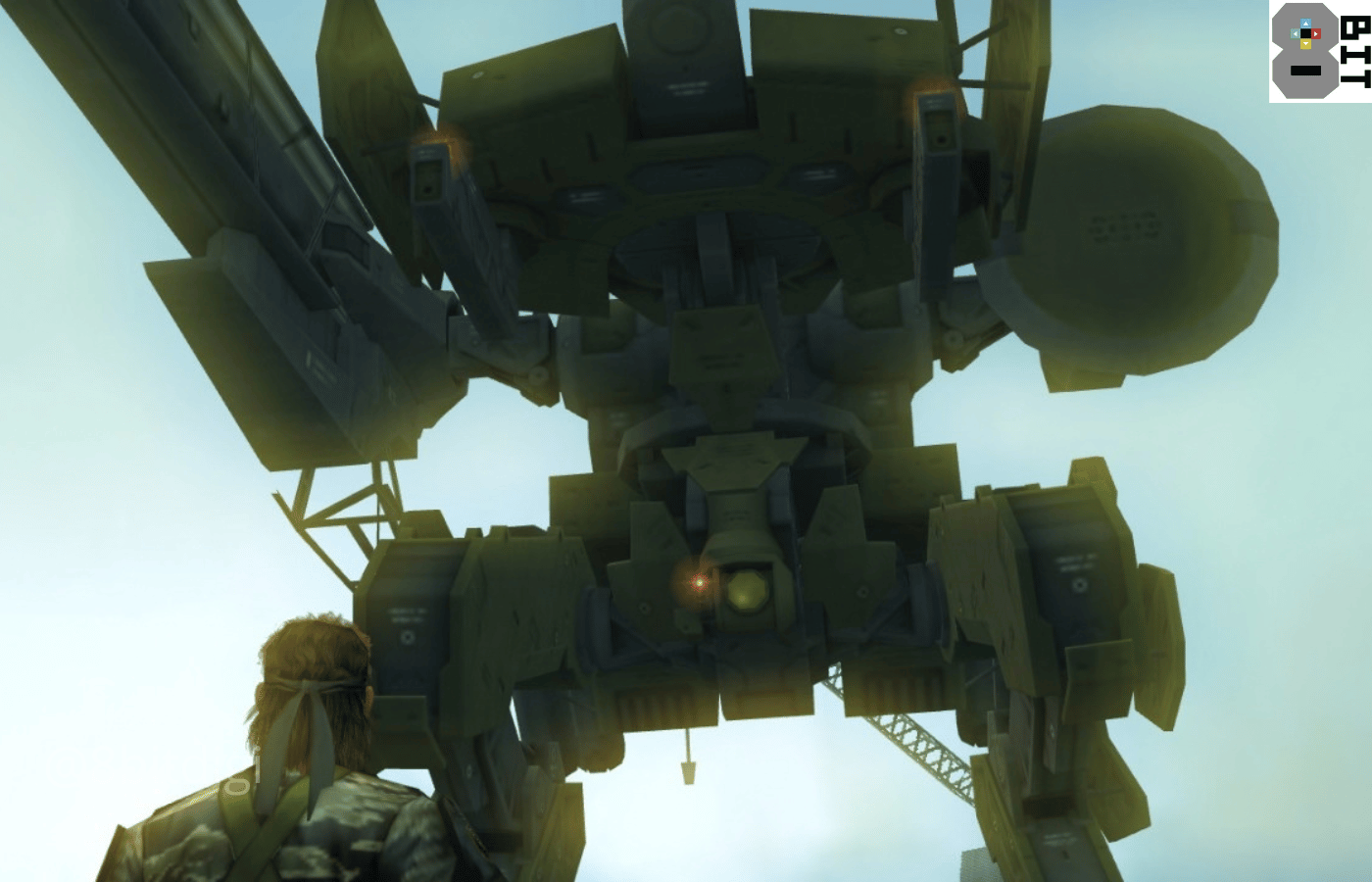
The Cold War, circa 1974: it has been ten years after the events of Operation Snake Eater. Big Boss has left the United States and formed his own private military company in the Caribbean, Militaires Sans Frontières (MSF). The events are set in motion when MSF is contacted by Ramón Gálvez Mena about an unknown military force establishing a base of operations in Costa Rica. Suspicious of Mena from the start, Big Boss accepts the assignment because he senses something bigger is at play. What he uncovers is a rogue CIA mercenary army, the Peace Sentinels, under the command of Hot Coldman, who are developing a nuclear-armed bipedal tank, Peace Walker. Fearing they could bring instability to the region and create tension between America and the Soviet Union, Snake must stop Hot Coldman at all costs. Yet nothing is what it seems, as greater forces are at work behind the scenes who are more interested in the Legendary Mercenary.
For a game developed for the PlayStation Portable, it is a strong follow-up to the events of Snake Eater while also building a bridge to the events of the Outer Heaven Uprising. The story is not just about stopping a rogue CIA mercenary army but also about Snake coming to terms with eliminating The Boss and accepting his status as Big Boss. During the course of his mission, he is confronted by the ghost of his mentor in the form of an AI pod designed by her lover. No matter how hard he tries, he cannot escape his past, and in the end, he has to accept it by carrying on her legacy, thus setting the foundation for the events of the series going forward.

If you have played The Phantom Pain, then most of the gameplay in Peace Walker is going to be familiar. However, this was where it was tested before being perfected.
The core gameplay is classic stealth action with elements from Snake Eater being carried over. Players are encouraged to avoid combat and rely on non-lethal tactics when necessary. Avoiding detection is made possible by patiently navigating each area, finding alternative routes, and blending seamlessly into the environment. Combat should always be a last resort, and taking non-lethal weapons is often encouraged. The game is broken down into different levels that can be replayed, as they offer plans needed to create new or improved gear. Unlike its predecessor, most of the gameplay advancements from previous titles have been cut down, making it feel more like the original Metal Gear Solid.
Players need to also focus on building up Militaires Sans Frontières. This is done by collecting plans for new weapons and gear, recruiting volunteers, and commandeering vehicles like tanks and attack helicopters. As your army builds up, you can develop new weapons and gear while better organizing your main force. The key to having a strong Mother Base is remembering to properly assign your staff and remove the weaker ones as your army starts to grow. Once you have your mercenary army built up, you can deploy them on side missions to battle enemy forces and spread your reputation. The better the mercenary army is, the better the player is able to overcome the many challenges they encounter.

Playing through Peace Walker in 2026 feels radically different than it did on the PlayStation 3 back in 2011. At the time, I was not expecting a follow-up on a grand scale like The Phantom Pain, but a continuation of the story of Big Boss. Looking back now, you can see how Peace Walker set the foundation for the final entry into the iconic series. Managing Mother Base, building up a mercenary army, deploying soldiers on side missions, building up an arsenal, and recruiting based on your reputation or the Fulton recovery system: all of that was first introduced here before being fleshed out or perfected years later. It is always fascinating to go back and replay or to witness how the foundation for a masterpiece was set long before its inception.
Metal Gear has always been a series rich in replay value, be it the different paths you can take, the content you can unlock, or the personal challenges it encourages you to set. Peace Walker‘s setup takes this one step further by allowing you to go back and replay the missions. You go back not just to do better, but to find unlockable weapons and gear, find recruits, and build up Mother Base. This ensures that once the main game is completed, you will be going back for more, resulting in who knows how many hours of replay value.
The game also did something unique to get around the limitations of the PSP by going for comic book style cutscenes. Comic artist Ashley Wood, known for his work on the series’ comic adaptations, was brought in to tell the story of Peace Walker through his panels while utilizing his distinctive style. This works to the game’s advantage, as it brings a fresh sense of how Kojima could convey a story by utilizing the advantages of the comic book medium. At the same time, it can visually tell a story like a visual novel and keep the narration contained in a resonable frame. If you played Guns of the Patriots, then you know exactly what I mean.
Finally, one cannot overlook all the homages and nods to other titles of the time hidden in the game. From a little nod to the Assassin’s Creed series to the hidden Monster Hunter levels, it was Kojima’s way of telling other game developers he admires the work they are doing. Outside of gaming, you have a good number of callbacks to classic films and music of the era that inspired his works. If you have read The Creative Gene, then you will notice many of these right away.

Right away, you will notice that Peace Walker‘s biggest issue can be summed up as what happens when you try to remaster a handheld title for consoles and the PC. Remember that the original game launched for the PlayStation Portable back in 2010 and the console version would not arrive until 2011. Although it saw a console release fairly quickly, it is clear that the game was designed and built for a handheld system. This shows in its visual and design limitations, from how the levels are structured to some of the combat functions feeling like a downgrade when compared to Snake Eater. While it was not uncommon for PSP games to be brought over to consoles, most of that happened during the PlayStation 2’s lifecycle, whereas Metal Gear Solid: Peace Walker saw a console launch on the PlayStation 3 and Xbox 360. Thus, there is an absolute difference in the visual quality in Peace Walker when compared to a title like Grand Theft Auto: Liberty City Stories.
However, these issues are more forgivable when compared to Mission 20: Torture Chamber Escape. Even back when I played it on the PlayStation 3, this part was the bane of the overall experience. Unfortunately, it has barely changed or been softened to make it less frustrating. The button mashing aspect is absolutely one of the worst and, without a doubt, the root of why I have hated QTEs in games. Trying to keep up and survive the torture moments is itself torturous on your fingers, and oftentimes the end result of a failed playthrough is me rage quitting. Honestly, it is well established that gamers loathe QTEs, and yet nobody working on this remaster had the sense to soften the experience or give players the option to skip it.

Of all the entries in Master Collection Vol. 2, Metal Gear Solid: Peace Walker stands out as my favorite. Like many fans, I was excited to see Metal Gear Solid 4: Guns of the Patriots finally escape PS3 jail. Yet once I picked up the collection, I found myself putting more time into Peace Walker than any other title. From a technical perspective, it’s a step down from Guns of the Patriots, since it’s an HD port of a PSP game. Still, its deep replay value kept pulling me back, and its story was easy to follow while remaining rich in mystery and substance.
But just because it’s my favorite doesn’t mean I’m quick to call it a masterpiece. It still carries the technical limitations of its PSP roots, and Mission 20: Torture Chamber Escape remains one of my least favorite levels. It makes me rage quit every time, and it’s torture on my hands.
Disclaimer: I bought the game on Steam.
This review is the critique and thoughts of one writer. If you want to see how other critics felt then check it out on OpenCritic.
8Bit/Digi is an independent media outlet that highlights the video game community and industry of the San Francisco Bay Area.

Stan Rezaee is the founder and editor of 8Bit/Digi, a Bay Area video game and anime news outlet. A journalist, gamer, and cosplayer covering the industry since 2016, he writes about retro games, new releases, fan conventions, and cosplay culture across the San Francisco Bay Area.


